At Build Pave, we understand that before you make an investment in our high quality products that it may be important to have a strong understanding of porcelain.
We believe porcelain paving slabs are a superior flooring solution compared to natural stone. Let us explain how porcelain paving is manufactured and why it is a better choice to transform any home or garden space you have in mind. If you would like to see how the two materials compare in more detail, read our guide to porcelain paving versus natural stone.
Mixing, Pressing and Kiln Baking

Porcelain paving tiles are manufactured carefully using a combination of sands, clays, and other minerals. This mixture is then pressed into a mould at high pressure and baked in a high-temperature kiln.
Once this stage is complete, a vitrification process then follows to increase the strength of the porcelain paving while reducing porosity and aiding resistance to water and scratches.
Strengthening and Colouring the Tiles
Elements such as feldspar, silica, and quartz are combined with the clay at high temperatures to form a much more polished appearance and improve the overall strength and durability of the slabs.
After this, the material is then left to dry before being coloured or printed on with the desired colour, style, or effect. At Build Pave, we have a beautiful collection of various porcelain paving styles to transform a wide range of spaces.
Printing, Firing and Cooling
Due to recent developments with porcelain inkjet printing technology, virtually any appearance can be achieved including stone, wood, slate, and even patterned finishes. Plus, size is always consistent throughout each batch because it is calibrated and rectified to form sharp and square edges.
Once printed on, the porcelain paving tiles are then fired in the kiln at temperatures reaching as high as 1,200 degrees Celsius. Following this, they are slowly cooled, which is a part of the manufacturing process equally as vital as heating the tiles.
What makes porcelain paving better than natural stone?
Many key attributes make porcelain paving the perfect product to revolutionise your outdoor or indoor environment.
A huge advantage is that porcelain paving slabs are extremely low maintenance and don’t require sealing, unlike natural stone and decking. Vitrified porcelain is also durable and hard-wearing, which makes it a long-lasting design that is highly resistant.
The non-porous finish of porcelain means that it is naturally resistant to stains, mould, moss, algae, frost, scratches, dents, and more. Porcelain paving is a fantastic investment for a range of home improvement projects and will remain looking good even after many years of footfall.
We offer porcelain paving at a range of prices, sourced from all over the world, and delivered directly to you from the source.
Shop Our Porcelain Paving Range

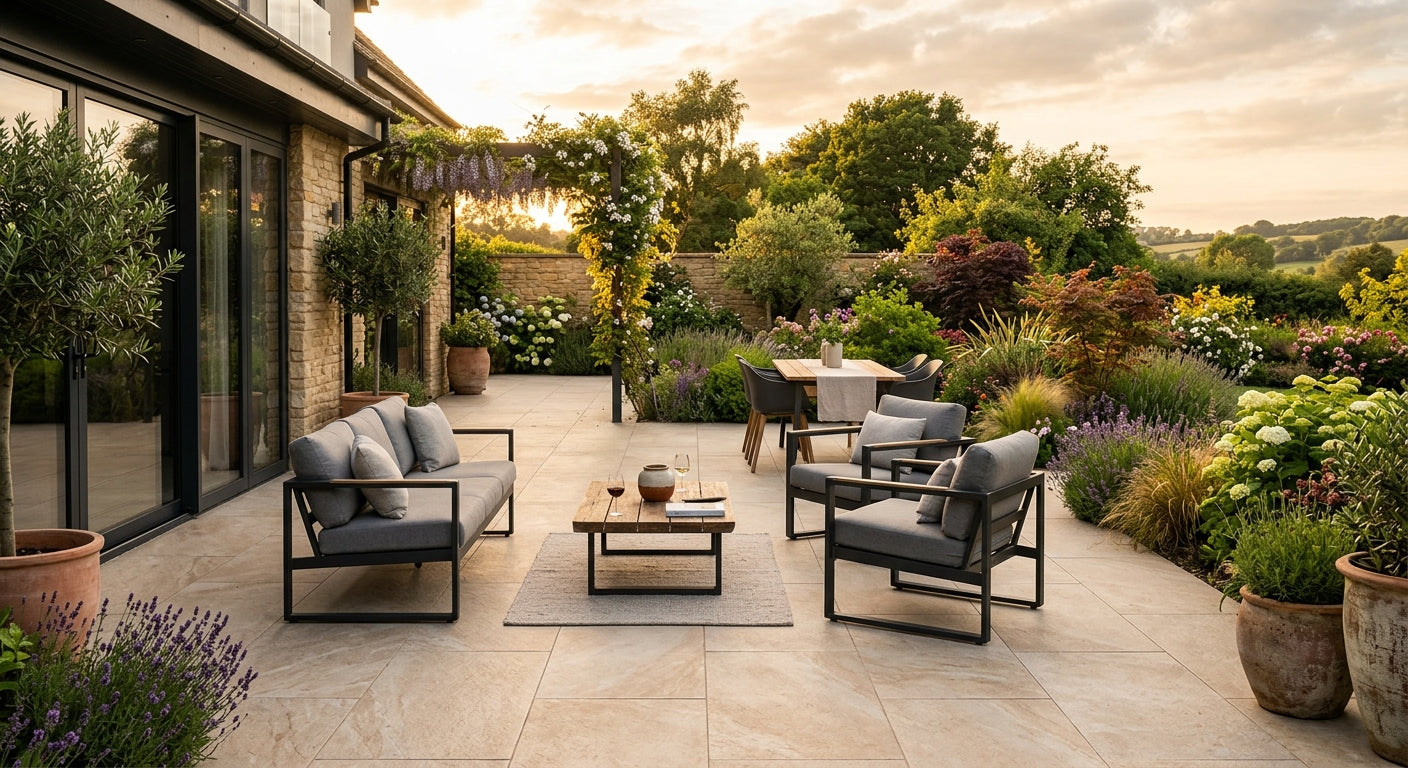
Now that you know how it’s made, take a look at the finished result. Our Volcano Grey 800x800 tile is a popular choice for showing off the smooth, consistent finish that the manufacturing process produces, and once you’ve picked a colour, our guide to laying porcelain paving will help you plan the installation.
Frequently Asked Questions
What is porcelain paving made from?
Porcelain paving is made from a mixture of sands, clays, and minerals such as feldspar, silica, and quartz. This mixture is pressed into shape and baked in a high-temperature kiln, which is what gives porcelain its strength and low porosity.
How are porcelain paving slabs coloured?
Colour and pattern are usually applied using inkjet printing technology once the tile has been pressed and dried. This method allows for a wide range of finishes, including stone, wood, and slate effects, with a high level of consistency between batches.
What temperature is porcelain paving fired at?
Porcelain paving is fired at temperatures reaching as high as 1,200 degrees Celsius. The tiles are then cooled slowly, which is just as important to the finished strength of the slab as the firing itself.
Is porcelain paving vitrified?
Yes. Vitrification is a key part of the manufacturing process, and it’s what makes porcelain paving so much more durable and water-resistant than natural stone or standard ceramic tiles.
If we haven’t yet convinced you that porcelain paving is the right investment for you and your home improvement project, get in touch with us and we will be happy to help with any queries you may have.
With valuable experience, we are able to help you achieve the perfect patio, garden, or home interior with our products.