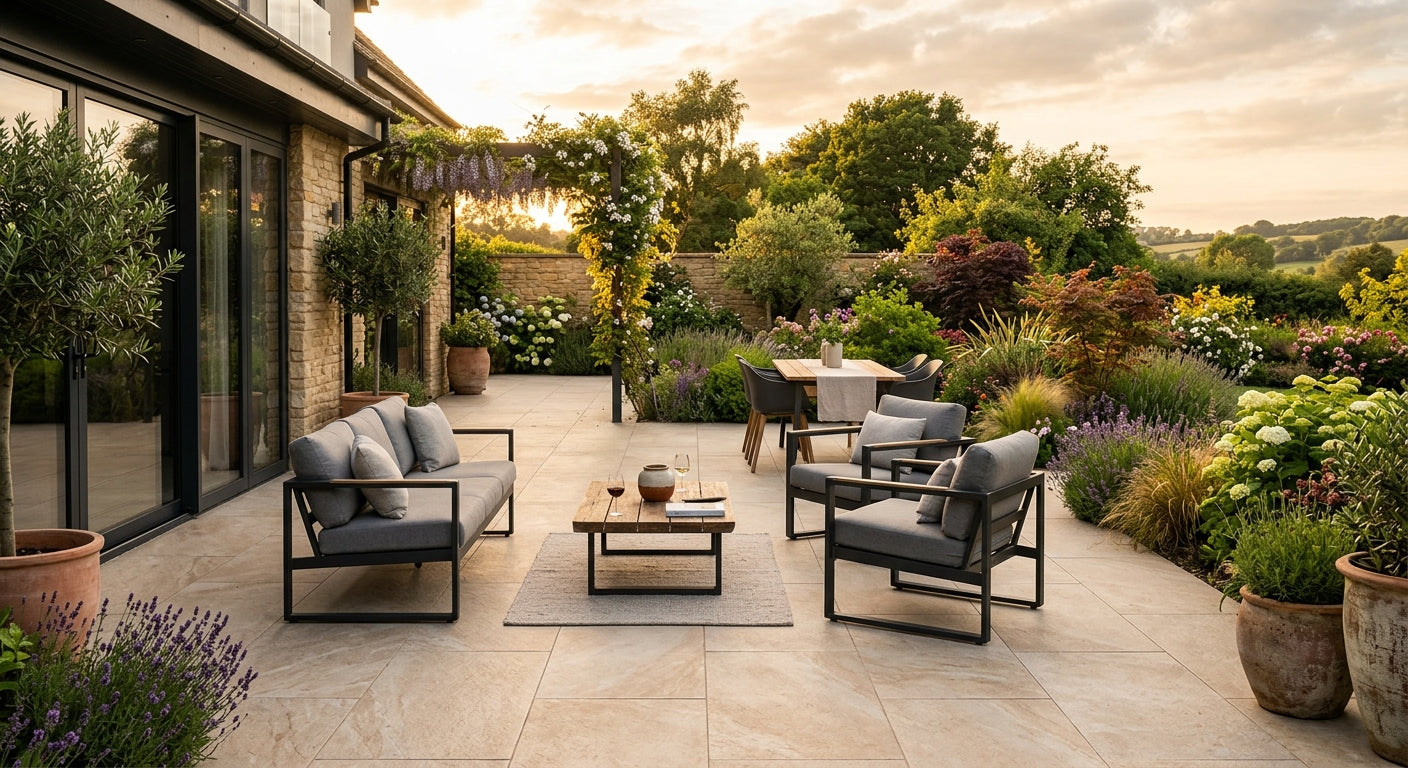
Porcelain paving slabs are the latest advancement to achieve the perfect patio. If you’re looking to start a new landscaping project, it is important to know the benefits of porcelain paving and why it is considered better than natural stone.
At Build Pave, we’re here to help you make up your mind between porcelain paving slabs and natural stone tiles to improve the look of your property. In this blog; we will consider how the versatility, durability, and range of options available weigh up.
So, which one is better?
Construction: How Porcelain and Natural Stone Are Made

Porcelain paving slabs have the reputation of being a premium patio option, which means that the long life of this flooring results in a more economical choice long term.
Porcelain paving is carefully manufactured using a combination of clays, sands, and other minerals, the mixture is pressed into a mould at high pressure and then baked in a high-temperature kiln.
The specialist printing process then helps the porcelain resemble natural timber or stone, which makes for ideal walkways, patios, porches, and a wide range of interior applications.
Unlike natural stone tiles, porcelain paving slabs and walling is fade-resistant and requires little to no additional treatment once the tiles have been manufactured. This means they are incredibly durable, considering their lightweight construction.
Natural stone paving composes granite, limestone, basalt, and sandstone; or in fact any type of beautiful rocks that are typically quarried and extremely strong.
A downfall of natural stone is that it tends to react in extreme temperatures and sunlight, which means that without proper sealing they can make your outdoor area warm and stuffy.
Stain resistance
Porcelain paving slabs are manufactured to be non-porous, which means that they are far less absorbent than natural stone and stain less readily. When it comes to moisture stains and porcelain tiles, water marks tend to be smaller and much less visible than on natural stone.
Installation
Due to their lightweight nature, porcelain paving slabs are much quicker and easier to install than stone tiles. Plus, the uniform sizing and ability to use tile spacers means that a sleek look is easy to achieve.
In addition, porcelain flooring is also less expensive to transport across large distances, which reduces carbon footprint and is more eco-friendly as a result. For a full step-by-step walkthrough, see our guide to laying porcelain paving correctly.
Scratching and slipping
In comparison to natural stone, porcelain paving slabs have a smoother and finer surface and are manufactured with an R11 anti-slip finish to combat slips, trips, and falls even when wet.
Due to the smooth surface of porcelain tiles, they are also resistant to scratches and abrasions, which makes them perfect for creating sleek flooring and finishes inside or outside your property.
Density and Weight
If you are looking to landscape your garden with a thinner, lighter tile, porcelain paving slabs are generally less thick than natural stone options such as granite, sandstone, or limestone.
This makes them ideal for application in kitchens, bathrooms, and for patio flooring, as well as opening up interior spaces to natural light and providing an airy atmosphere. In comparison, natural stone is ideal for utility areas and heavy-duty spaces, such as workshops and sheds.
Porcelain vs Sandstone Paving

Sandstone is the most common natural stone paving material in UK gardens, so it’s worth a direct comparison. Sandstone has a warmer, more textured, traditional look that many homeowners love, particularly for period properties and cottage-style gardens. However, it’s more porous than porcelain and typically needs sealing every few years to resist staining and frost damage. Porcelain gives you a similar natural stone look, including our sandstone-effect finishes such as Rocca Fossil, with significantly less ongoing maintenance, which is why it’s increasingly the preferred choice for new patios.
At a Glance: Porcelain vs Natural Stone
| Factor | Porcelain Paving | Natural Stone |
| Weight | Lightweight — easier and faster to lay | Heavier — typically needs more support during installation |
| Porosity | Very low water absorption, highly stain-resistant | More porous, more prone to staining without sealing |
| Colour consistency | Fade-resistant, consistent tone across a batch | Natural variation batch to batch; can weather over time |
| Slip resistance | R11-rated textured finish as standard | Varies by finish and stone type |
| Maintenance | Minimal — occasional wash | May need periodic sealing depending on stone type |
| Best suited to | Patios, pathways, poolsides, most interior/exterior uses | Heavy-duty or utility areas, or a traditional/natural look |
Frequently Asked Questions
What are the negatives of porcelain paving slabs?
The main drawbacks are the upfront cost, since porcelain typically costs more per m² than budget natural stone or concrete, and installation: because the slabs are so dense and hard, cutting them on-site requires a diamond-tipped blade and a bit more care than softer stone. Very large-format porcelain tiles can also be more prone to cracking if the sub-base isn’t laid perfectly flat, so a well-prepared, well-compacted base matters more than it does with some other materials.
Can you jet wash porcelain paving slabs?
Yes, porcelain’s dense, non-porous surface handles pressure washing well and it’s one of the easier paving materials to keep clean this way. Use a fan-jet nozzle rather than a pinpoint jet and keep a reasonable distance from the surface, and take care around the pointing or grout joints, since a jet held too close or too long can gradually erode softer jointing compounds even though it won’t damage the tile itself.
Can weeds grow through porcelain paving joints?
Weeds can’t grow through the tile itself, but they can establish in the joints between slabs if organic debris and soil build up there over time, the same as with any paved surface. Using a proper flexible pointing compound or resin jointing at installation, rather than loose sand, significantly reduces this, and it’s a normal, if fairly infrequent, part of routine maintenance to keep joints clear.
How long does porcelain paving last?
Porcelain paving is typically expected to last 20–30 years or more with basic care, and often considerably longer, since the material itself doesn’t degrade, fade, or wear the way natural stone or concrete can. Its actual lifespan in practice usually comes down to installation quality: a well-prepared base and properly jointed slabs will outlast a rushed installation regardless of the paving material used.
Which is better, sandstone or porcelain?
It depends on your priorities. Porcelain is more consistent, easier to maintain, and more resistant to staining and frost damage, which makes it a lower-maintenance long-term choice. Sandstone has a warmer, more natural, textured look that some homeowners prefer for period or cottage-style gardens, but it’s more porous and typically needs periodic sealing to perform well over time. For a modern, low-maintenance patio, porcelain is usually the safer choice; for a traditional look where some upkeep is acceptable, sandstone remains a strong option.
With valuable experience distributing porcelain paving, we are able to help you achieve the perfect patio, garden, or home interior with our products. Contact us and we will discuss your specific needs today.