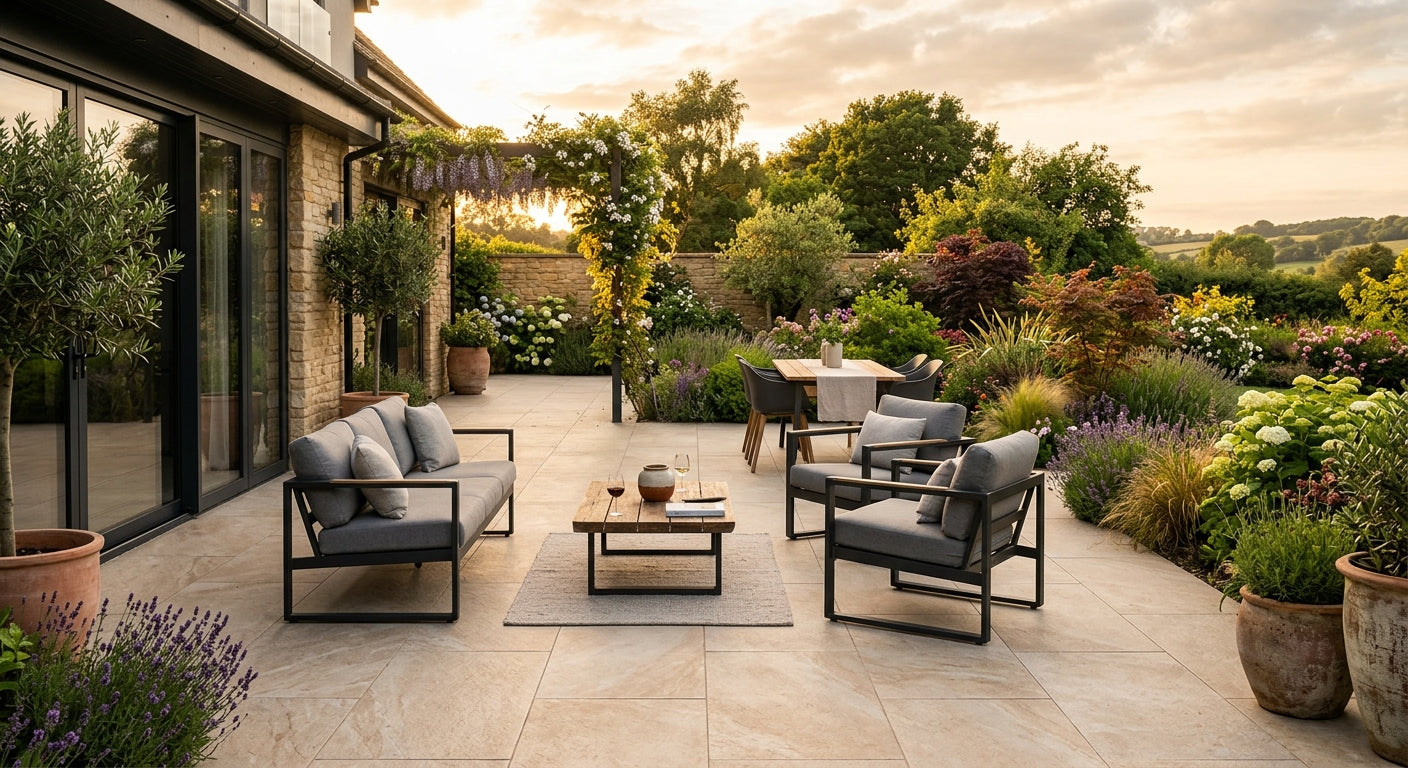
Outdoor decking is a beautiful way to complete your garden aesthetic and create a relaxing space for you and your guests during the summer months. However, despite looking great, there are drawbacks to decking, which is why porcelain paving excels.
Much like natural stone paving, decking is a popular choice for gardens. The problem with natural materials is that they require a high amount of maintenance and can weather and tire easily, especially as a result of the unpredictable weather conditions seen in the UK.
Porcelain paving slabs are the new way to transform your garden without the ongoing aftercare that comes with decking. Our paving is manufactured with incredible strength and durability, which makes it resistant to changes in weather conditions and any unprecedented accidents that may occur.
Porcelain paving: A low-maintenance alternative to decking
Built to last without the upkeep
Porcelain doesn't rot, warp or need re-oiling the way timber does, and it holds up better over time than most composite boards too. We cover exactly why in why porcelain paving is perfect for outdoors. For a decking comparison, the takeaway is simple: once it's down, there's nothing to re-seal, re-stain or replace.
Safer underfoot in wet weather
Every tile in our range carries an R11 rating for slip resistance to current British testing standards. That matters most in exactly the conditions that catch decking out: a shaded corner where algae builds up, or a run of wet weeks in a row. Decking can be treated to slow this down, but it's an ongoing job rather than a one-off fix.
Wood effect porcelain tiles: the look of decking, none of the drawbacks
If it's the warm, natural grain of timber you're after rather than decking itself, wood effect porcelain gets you there without the maintenance. Our Hard collection recreates the colour and texture of real decking boards closely enough that most visitors won't clock the difference, and because it's fired porcelain rather than timber, it won't rot, grey or splinter the way a real deck does after a few seasons outside.
-
Hard Nut 1200x400: a rich, mid-brown tone close to natural oak.
-
Hard Ash 1200x400: a soft, pale grey-brown for a Scandinavian-style finish.
-
Hard Greige 1200x400: a muted grey-beige that works well against most brick and render.
-
Hard Brown 1200x400: a deeper, walnut-style shade for a more traditional look.
Browse the full wood effect porcelain tiles collection, or see styling your garden with porcelain paving slabs for layout ideas.
Where decking makes sense
Decking isn't without its uses. It's usually the more practical choice for a raised terrace, an uneven or sloped plot, or a balcony where weight matters, since it doesn't need the same firm sub-base a porcelain patio does. If you're renting and want something removable, or the budget only stretches to a basic softwood deck for a couple of summers, that's a fair reason to pick it over paving. For a garden that's meant to last, though, porcelain's lower running costs tend to win out over time.
How to choose between porcelain paving and decking
The right choice usually comes down to how long you want the finished result to last, and how much time you're willing to spend maintaining it afterwards.
-
Ground-level patio, path or driveway-adjacent space: porcelain paving is generally the stronger long-term choice, for the reasons above.
-
Raised deck, balcony or awkward slope: timber or composite decking is often more practical structurally, since it doesn't need groundwork the way paving does.
-
Budget-conscious, shorter-term project: a basic softwood deck costs less to install today, though it's worth reading Is Porcelain Paving Worth the Price? to see how that balances out over several years.
-
Want a bit of both: many gardens run porcelain paving up to a raised timber or composite deck for contrast. Our guide on styling your garden with porcelain paving slabs has ideas for that kind of layout.
Frequently Asked Questions
Is porcelain paving cheaper than decking?
It depends what you're comparing it with. A basic pressure-treated softwood deck can cost less upfront than porcelain, but premium hardwood and most composite decking are priced similarly to porcelain paving or higher, before factoring in decking's ongoing upkeep. See Is Porcelain Paving Worth the Price? for a full breakdown.
Does porcelain paving look as good as wood decking?
Standard porcelain doesn't resemble timber, but our wood effect range is designed specifically to replicate it, right down to the grain and colour variation, while still behaving like porcelain outdoors.
Can porcelain paving be laid where decking used to be?
Yes, though the old decking's timber frame and joists need to come up first, since porcelain needs a solid, level sub-base rather than a raised timber structure. Our guide on how to lay porcelain paving correctly walks through the process step by step.
Is porcelain paving slippery compared to decking?
No, if anything it performs better in the wet. Our tiles are R11-rated for slip resistance, whereas timber decking can turn slippery once algae or moss sets in, particularly in shaded, damp corners of a garden.
If you like the warmth of decking but not the maintenance, order a sample from our wood effect range and see how it looks in your own garden, or get in touch and our team can talk you through which option makes the most sense for your space.